Mastering the Letter A: A Designer's Activity Book Approach
The Foundation of Visual Literacy
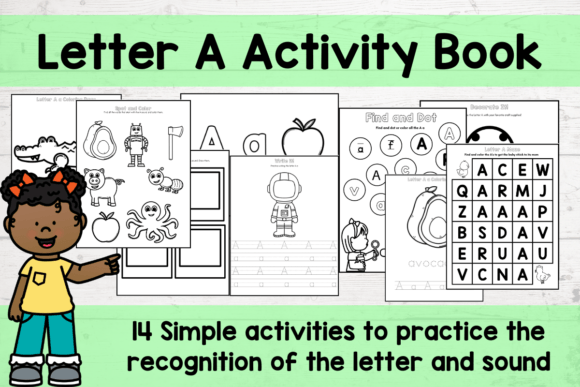
In typography and design, we often obsess over kerning and tracking, but the true foundation of any brand identity or editorial layout rests on the legibility of the alphabet itself. For parents, educators, and creative professionals designing learning materials, the Letter A Activity Book offers a masterclass in pedagogical design. This isn't just a collection of worksheets; it is a carefully curated unit designed to help children master the short 'a' sound through a variety of sensory inputs. By combining tracing, mazes, and coloring exercises, this book transforms the abstract concept of the letter 'a' into a tactile experience. For designers creating educational products, this approach highlights how varying the presentation of a single glyph—through different fonts and contexts—can reinforce recognition and retention. The inclusion of diverse typefaces within the "Find and Dot" exercises demonstrates an advanced understanding of how children encounter letters in the real world, moving beyond standard block letters to cursive and sans serif variations.
Visual Hierarchy and Engagement in Learning Materials
Looking at the structure of the Letter A Activity Book, we can see practical applications of visual hierarchy that are valuable for any content creator. The unit includes a "large tracing page with an apple" and specific sections for capital and lowercase distinction. This separation is crucial for cognitive processing. When designing worksheets or activity pages for a client, the "decorate the capital letter A" and "decorate the lowercase letter A" prompts encourage creativity while reinforcing the difference between tall and short letters—a key component of reading readiness. For the designer, this serves as a reminder that whitespace and structure are just as important in a child's workbook as they are in a corporate annual report. The inclusion of mazes for both capital and lowercase 'a' adds a gamification element, which is a powerful tool for maintaining user engagement, whether the user is a toddler or a customer browsing a website.
Practical Applications for Creative Professionals
For entrepreneurs and small business owners in the education sector, the Letter A Activity Book provides a blueprint for effective content creation. The prompt to "draw 4 things around the room that start with the letter" bridges the gap between the digital or printed page and the user's physical environment. This contextual learning is something marketers strive for daily—creating campaigns that resonate with the audience's immediate reality. Furthermore, the "Color the pictures that start with A" exercise demonstrates how to use visual cues to support text. If you are a blogger or content creator developing printables, consider how this book uses simple line art to allow for personalization. The instruction to "decorate... with your favorite craft supplies" invites the user to co-create the final product, increasing their emotional investment in the outcome. This principle applies equally to interactive digital design and physical product packaging.
Ultimately, the Letter A Activity Book is more than a set of drills; it is a tool for building confidence. By focusing on the short sound and providing multiple pathways to mastery—from the astronaut coloring page to the open-ended drawing prompts—it accommodates different learning styles. For the creative professional, reviewing resources like this can spark new ideas for how we structure information. Whether you are designing a new typeface, laying out a magazine, or creating social media graphics, the principles of clarity, repetition, and variety found in this activity book remain the gold standard for effective communication.